
Half your guest list has never been to Dubai. That one fact changes almost everything about how a wedding here actually gets planned, and it’s the part most planning checklists skip entirely. They’ll tell you to book a venue, pick a date, hire a photographer — the same advice you’d get for a wedding down the road from your childhood home. But a wedding where the majority of your guests are stepping off a plane for the first time asks something different of the people designing it, and it asks something different of you too.
We’ve sat across the table from enough couples planning a Dubai wedding from overseas to know the shape of the problem before it’s fully spoken. There’s a particular kind of anxiety that comes with hosting people in a city you love but they’ve only seen in photos — a worry that goes beyond “will they have a good time” into “will they understand why we chose this place.” This guide is for that worry, and for everything practical that sits underneath it.
Why a Destination Wedding in Dubai Isn’t Just a Wedding With a Nicer Backdrop
There’s a temptation to treat a destination wedding as a regular wedding that happens to be somewhere scenic — same schedule, same vendors, same expectations, just with better light for photos. That framing causes most of the actual problems couples run into. A wedding where your guests are local can absorb small inefficiencies without anyone noticing. Someone arrives a little early, someone else gets lost finding parking, the timeline slips by twenty minutes here and there. None of it matters much because everyone goes home to their own bed afterward and the wedding was one evening carved out of an ordinary week.
None of that holds when your guests have flown for this. They’ve taken time off work, arranged childcare, spent money on flights and hotel rooms, and built an entire trip around three or four days in a city that isn’t theirs. The wedding stops being a single event and becomes the anchor of someone else’s holiday, whether you intended that or not. Every decision — the ceremony start time, whether there’s a welcome dinner, how spread out the events are across the week — either respects that reality or fights against it.
This is also where a destination wedding planner in Dubai earns their keep in a way a regular planner might not. The job isn’t just choosing beautiful things; it’s building a structure flexible enough to absorb jet lag, unfamiliar customs, and the general disorientation of a new city, without any of that friction reaching the couple or showing up in how the week feels. Good design, in this context, includes designing the gaps between events just as carefully as the events themselves.
The Venue Conversation Looks Completely Different Once Jet Lag Enters the Room
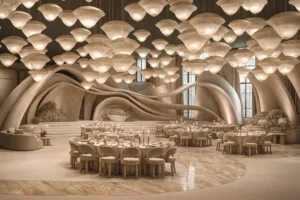
Ask a Dubai wedding planner what changes first when the guest list is mostly international, and venue selection comes up before anything else. Not because the venues themselves change, but because the criteria for choosing one does. A ballroom that photographs beautifully might sit forty minutes from every hotel your guests are staying in, which sounds minor until you picture someone who landed twelve hours ago trying to find a taxi at eleven at night after a long reception.
Proximity to accommodation becomes a genuine design constraint, not an afterthought. The venues that tend to work best for couples flying guests in are the ones that either sit inside a hotel or resort complex — so nobody has to travel between where they’re sleeping and where the wedding is happening — or that cluster near a small handful of hotels you can steer your guest list toward when you send out the invitation. A desert resort an hour outside the city can be extraordinary, and we’ve built entire weddings around that kind of setting, but it comes with an obligation to think through transport in detail rather than leaving guests to sort it out themselves.
Weather and season matter here too, in a way local guests would simply adjust for without thinking. Someone who has lived in Dubai for a decade knows instinctively that an outdoor ceremony in July is a mistake and one in December is a gift. A guest arriving from a cooler climate for the first time doesn’t have that instinct, and neither, frankly, do all the wedding blogs written with a different city in mind. Venue choice and calendar choice are really the same decision here, and they deserve to be made together rather than one after the other.
There’s also the question of what a venue communicates to someone seeing it for the first time. A couple who grew up in Dubai might choose a venue for what it means to them personally — a hotel they’ve celebrated other milestones at, a beach they’ve spent years returning to. A guest with no history in the city reads the same venue purely on what it looks and feels like in the moment, which changes how much weight falls on atmosphere and first impression. A skyline view lands differently on someone seeing it in person for the first time than it does on someone who drives past it weekly, and the venues that tend to leave the strongest impression on an international guest list are the ones that make that first encounter feel considered rather than incidental — the walk from the entrance, the moment the ceremony space actually reveals itself, the transition from arrival into the evening.
Designing the Week Around People Who Have Never Set Foot Here
The single biggest shift in planning a Dubai wedding for a mostly international guest list is realizing the wedding day is no longer the only day that matters. Couples who try to compress everything into one evening — ceremony, dinner, dancing, done — tend to leave their guests with a strange, hollowed-out feeling afterward: they flew all this way for four hours. The couples whose guests talk about the trip for years afterward almost always built something around the wedding day, not just on it.
That doesn’t need to mean a five-day itinerary with a shuttle bus and matching sunglasses. It can be as simple as a welcome gathering the evening people arrive, something low-key where jet-lagged guests can see each other’s faces and start feeling like a group rather than a scattered collection of flights. It can mean a relaxed brunch the morning after, giving people a reason to linger in the city instead of racing to the airport. The shape matters less than the intention behind it: acknowledging that your guests gave you more than an evening, and giving a little of that back.
There’s a cultural dimension worth naming honestly, too. A guest list drawn from multiple countries often means a guest list drawn from multiple customs, dietary needs, and expectations about what a wedding even looks like. We’ve designed weddings where the couple’s two families had genuinely different ideas about how long a ceremony should run or what the meal should include, and the job wasn’t picking a side — it was finding the version of the day that let both traditions feel honored rather than diluted. That kind of cultural fusion, done well, tends to become the thing guests remember most fondly, precisely because it wasn’t generic.
The Practical Realities No Save-the-Date Ever Mentions
Somewhere between the excitement of choosing a venue and the relief of sending invitations, there’s a stretch of planning that nobody enjoys but everybody needs, and it looks different for a Dubai wedding than it does anywhere else. Visa requirements are the obvious one — many nationalities can enter the UAE visa-free or get a visa on arrival, but not all, and the couples who assume everyone’s situation matches their own tend to discover the gap far too late, sometimes only when a guest emails a week before the wedding asking for help they now urgently need.
Heat is the other reality that surprises people who’ve only seen Dubai in carefully lit photographs. A wedding planned for outdoors in the wrong month isn’t just uncomfortable, it can genuinely derail the day — makeup melting before the ceremony even starts, guests retreating indoors the moment the formalities end, flowers wilting faster than anyone accounted for. The months between November and March exist for a reason, and almost every experienced Dubai wedding planner will steer you toward that window unless there’s a strong reason not to.
Then there’s the quieter logistics that don’t photograph well but decide whether the week runs smoothly: currency, tipping norms that differ from what your guests are used to, the fact that alcohol service at a wedding depends entirely on the venue’s license and needs to be confirmed early rather than assumed. None of this is romantic to think about while you’re choosing florals, but every one of these details, left unaddressed, becomes a small crisis during the one week you most need things to run without your attention.
What Happens Behind the Scenes While You’re Not Watching
The part of destination wedding planning that couples see the least is usually the part that determines whether the week feels effortless or exhausting, and it has almost nothing to do with aesthetics. It’s the vendor coordination happening across time zones months before anyone arrives — confirming a florist can actually source the flowers you want during Dubai’s climate rather than promising and improvising later, making sure a photographer has shot at your specific venue before so they already know where the light falls in the afternoon, checking that a hotel’s event team has handled a wedding of your exact size rather than assuming a five-star name guarantees five-star wedding experience.
For couples planning from another country, this coordination often happens entirely without them, which is both the appeal and the risk of hiring someone local. The appeal is obvious: you’re not managing eleven vendor relationships from six time zones away while also holding down a job and telling your parents where to stay. The risk shows up when the person coordinating on your behalf doesn’t actually have established relationships with vendors here, and is essentially learning the city’s wedding landscape at the same time they’re planning your wedding in it. That distinction rarely shows up in a portfolio, but it shows up unmistakably on the day.
This is also where the difference between planning and design becomes concrete rather than theoretical. Planning keeps eleven moving parts from colliding. Design decides what those eleven parts should look and feel like once they’re in place. A couple flying in for their own wedding needs both handled by people who’ve done it before, ideally people who talk to each other constantly rather than meeting for the first time during setup.
Time zones complicate this more than most couples expect going in. A vendor call that would take fifteen minutes in person can stretch into a week of delayed replies when one side of the conversation is asleep while the other is working, and the couples planning from six or eight hours away often find themselves waking up to decisions that needed to be made overnight. The value of a Dubai-based team here isn’t just local knowledge, it’s absorbing that time-zone friction so it never reaches the couple as a bottleneck. Confirmations happen while you sleep. Problems get solved before you’re awake enough to hear about them as problems at all, which is really the quiet, unglamorous definition of a wedding that felt effortless from the outside.
What Actually Makes a Dubai Destination Wedding Feel Effortless
Every couple planning a wedding from overseas eventually asks some version of the same question: how do we make sure this feels like us, and not like a package deal we booked online. The honest answer has less to do with budget than most people expect, and more to do with sequencing. The weddings that feel the most personal, even with a guest list flying in from four different countries, are the ones where the couple’s actual story shaped the choices — the venue, the food, the small rituals folded into the evening — rather than the couple being handed a template built for someone else’s wedding in someone else’s city.
That’s the real argument for working with a team that designs destination weddings in Dubai specifically, rather than a generalist planner adding Dubai to a list of cities they’ll work in. The details that make a wedding feel inevitable rather than assembled — the right hour for the ceremony given the season, the venue that doesn’t ask your grandmother to walk across gravel in heels, the welcome dinner that introduces two families to each other before the wedding day asks them to celebrate together — come from having done this here, specifically, more than once.
None of this needs to feel overwhelming from where you’re sitting, wherever that is right now. The couples who enjoy this process most tend to be the ones who hand the logistics to people who live in the details, and spend their own planning energy on the parts that are actually theirs to decide: what the day should feel like, who they want standing beside them, and what they want their guests — jet-lagged, curious, a little out of their depth in a beautiful new city — to carry home with them once the flight lands back where they started.
Frequently Asked Questions
Do I need a wedding planner based in Dubai if I live abroad?
It helps significantly. Local relationships with venues, vendors, and licensing requirements are difficult to replicate remotely, and someone on the ground can catch problems — a venue’s alcohol license, a florist’s seasonal limitations — long before they become visible to you.
What’s the best time of year for a destination wedding in Dubai?
Late November through March offers the most comfortable outdoor temperatures. Weddings planned outside this window generally need to shift ceremonies indoors or into the evening to avoid daytime heat.
Do most of my international guests need a visa to attend?
It depends on nationality. Many countries qualify for visa-free entry or a visa on arrival in the UAE, but not all, so it’s worth confirming requirements for your specific guest list well before invitations go out.
How far in advance should we start planning if most guests are flying in?
Earlier than a local wedding requires, generally eight to twelve months, since guests need time to arrange flights, accommodation, and time off work around your date.
Should we plan events beyond the wedding day itself?
It’s worth considering. A welcome gathering or a post-wedding brunch gives guests who’ve traveled a long way more reason to feel included in the trip, rather than attending a single evening and leaving.